A free table for Magic: The Gathering that runs in the browser — for a game online, a game in person, or the deck you're building for either — where the database, not the browser, decides who can see which cards.
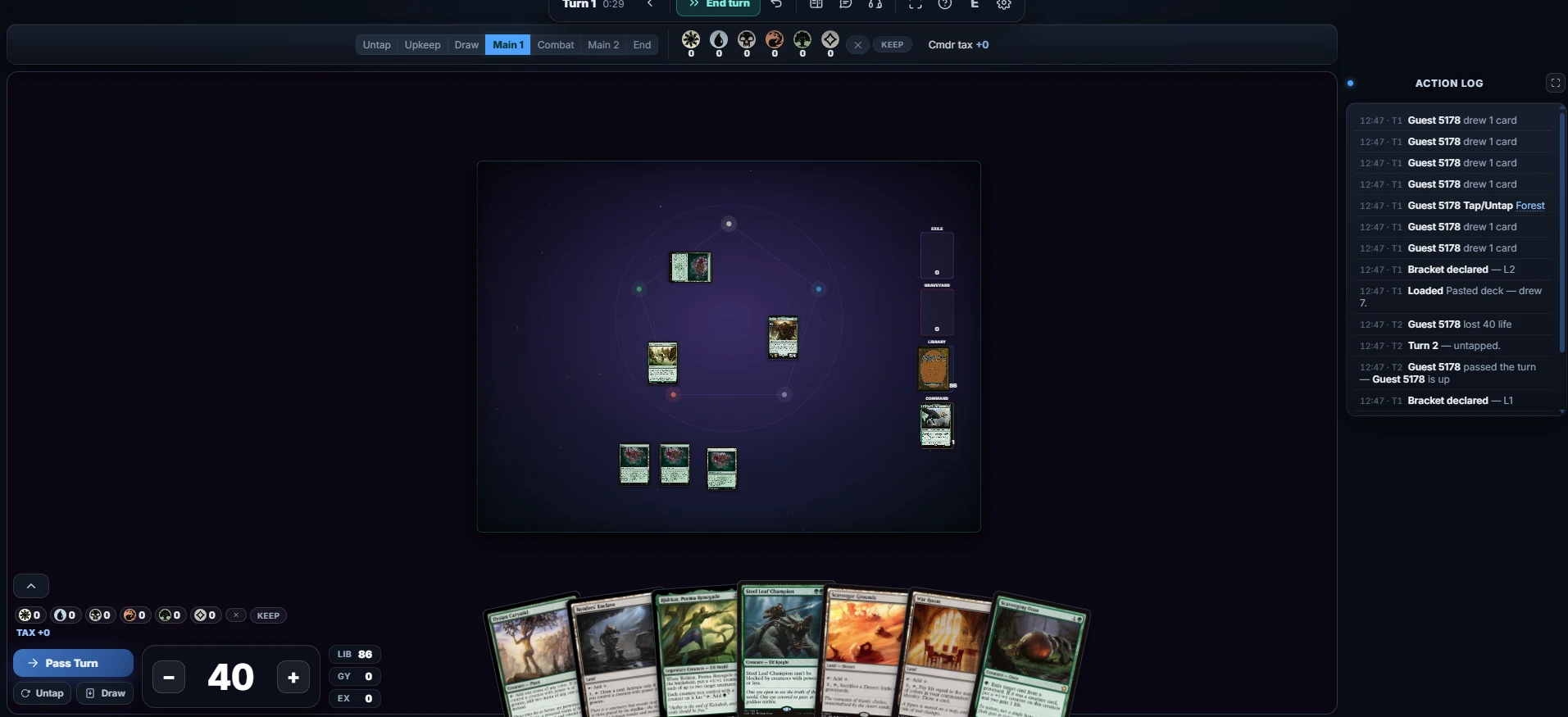
Sigil
Online MTG tabletop — realtime multiplayer where hidden zones are enforced by Postgres, not the client.
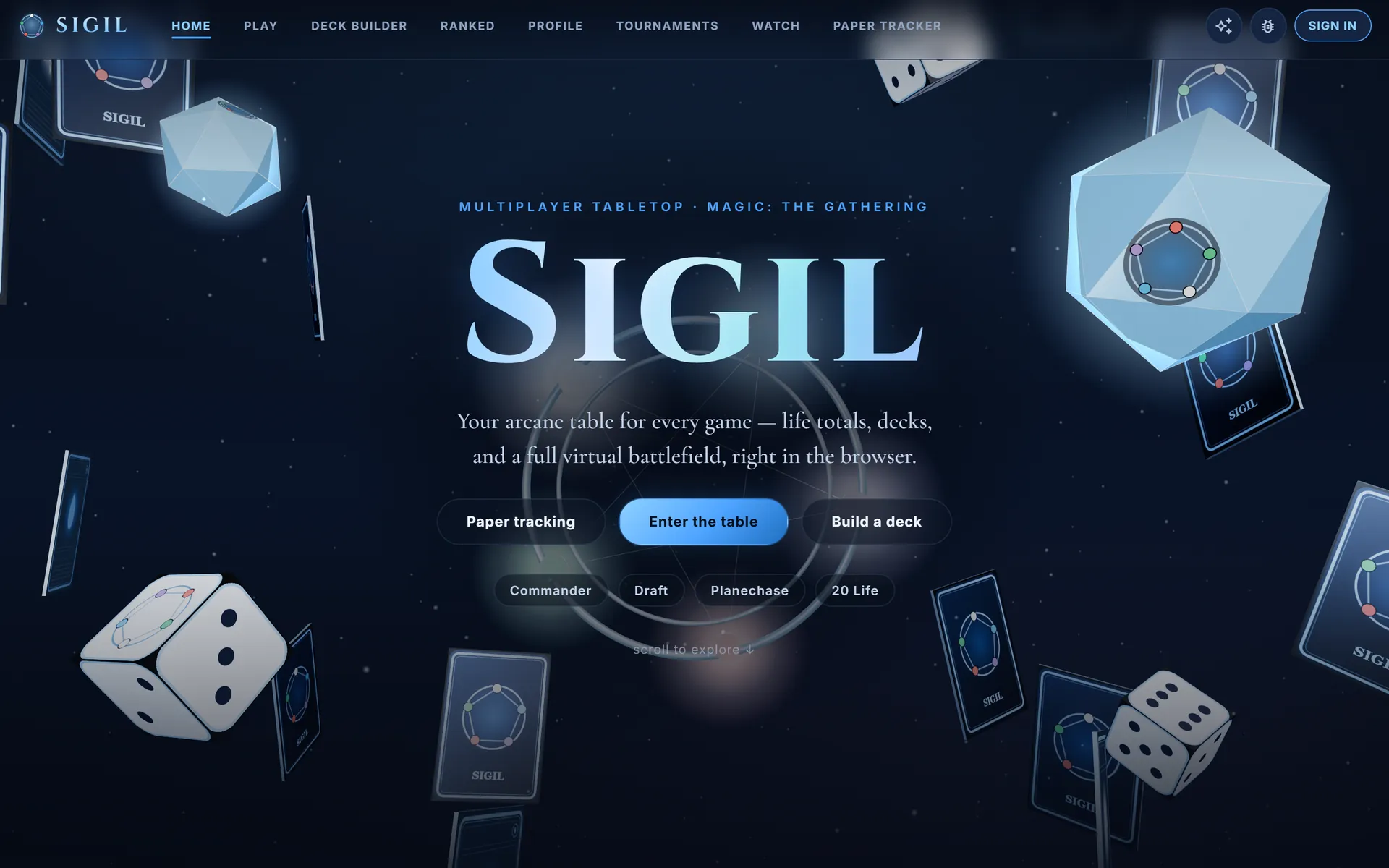
Sit down and play
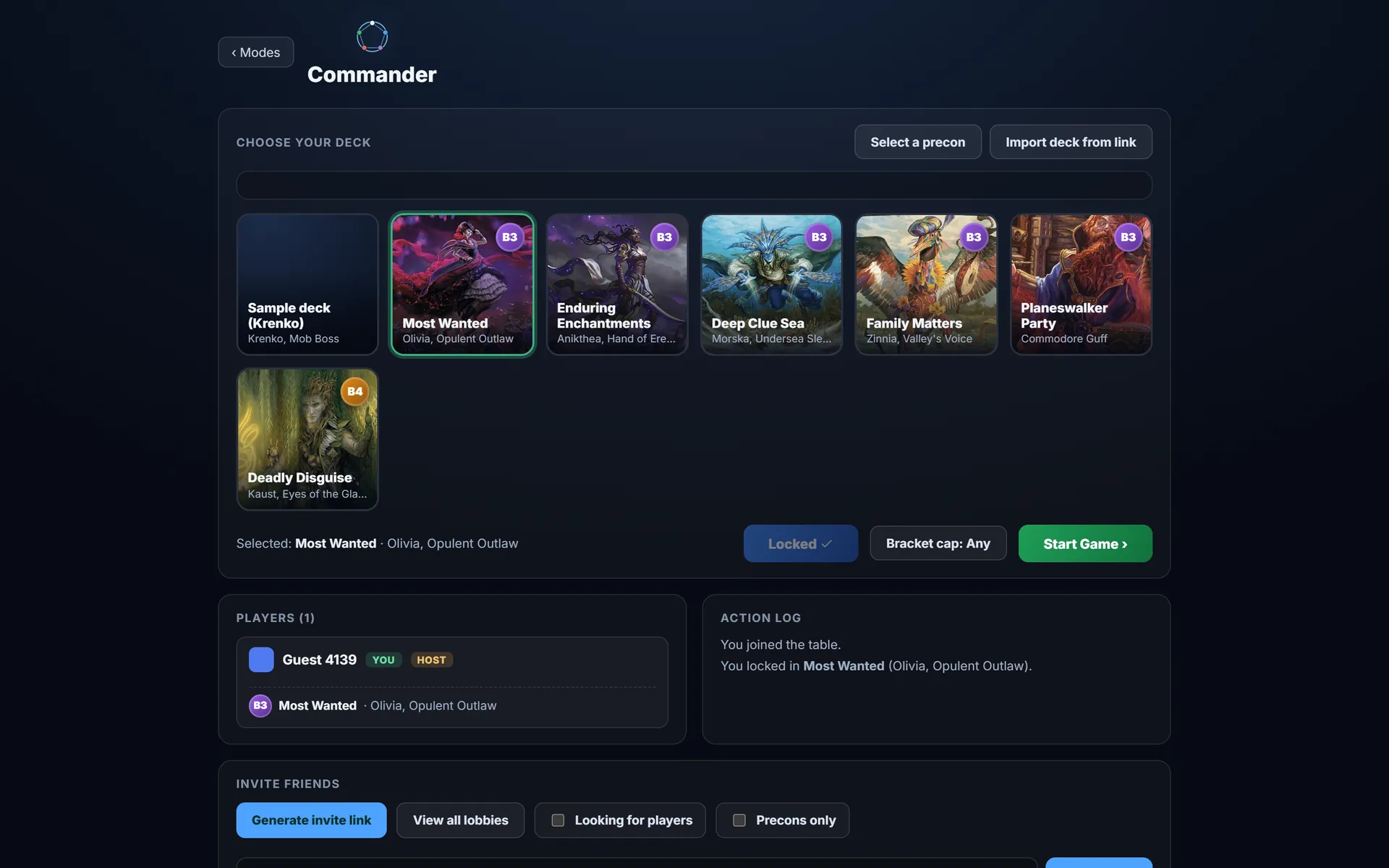
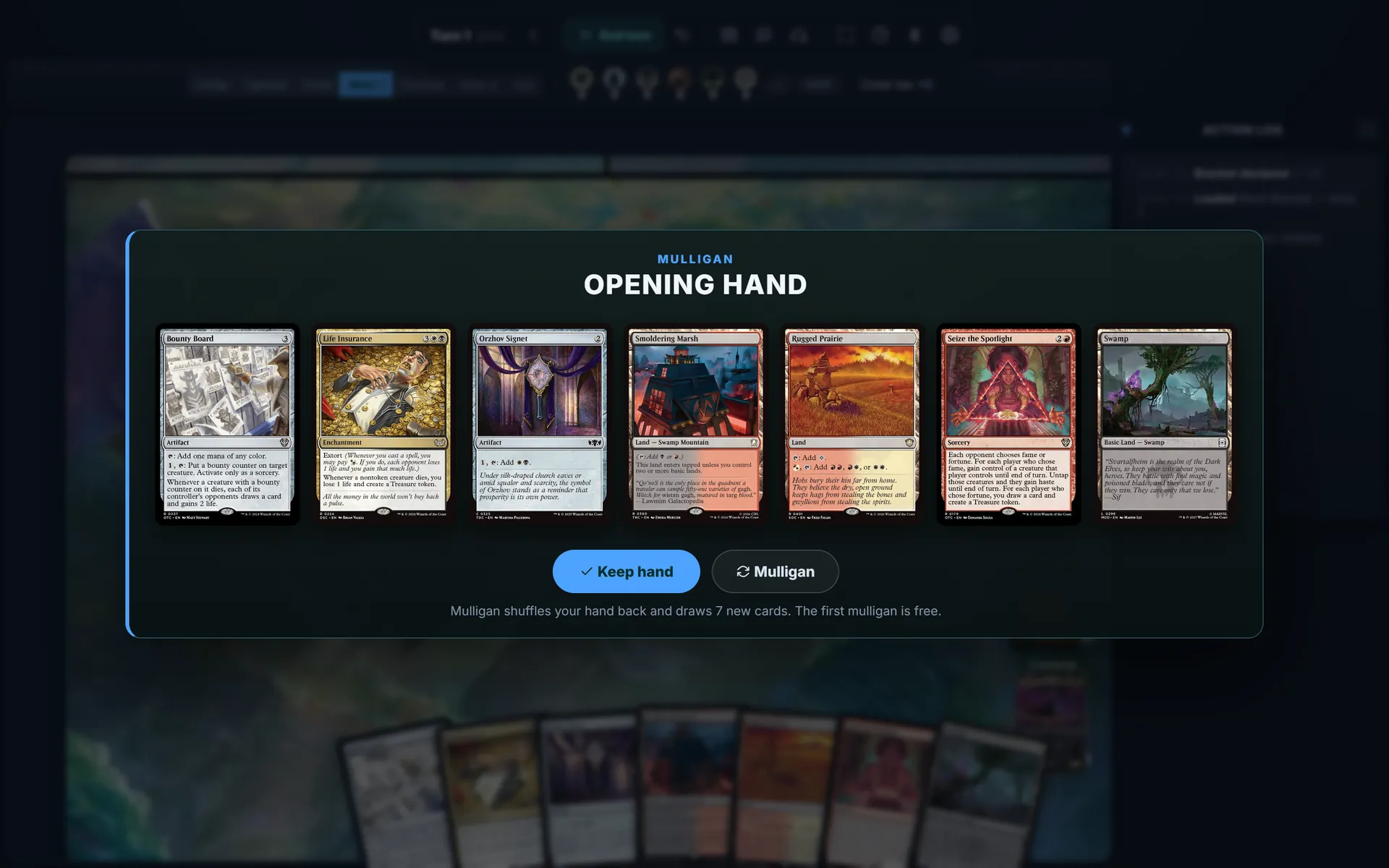
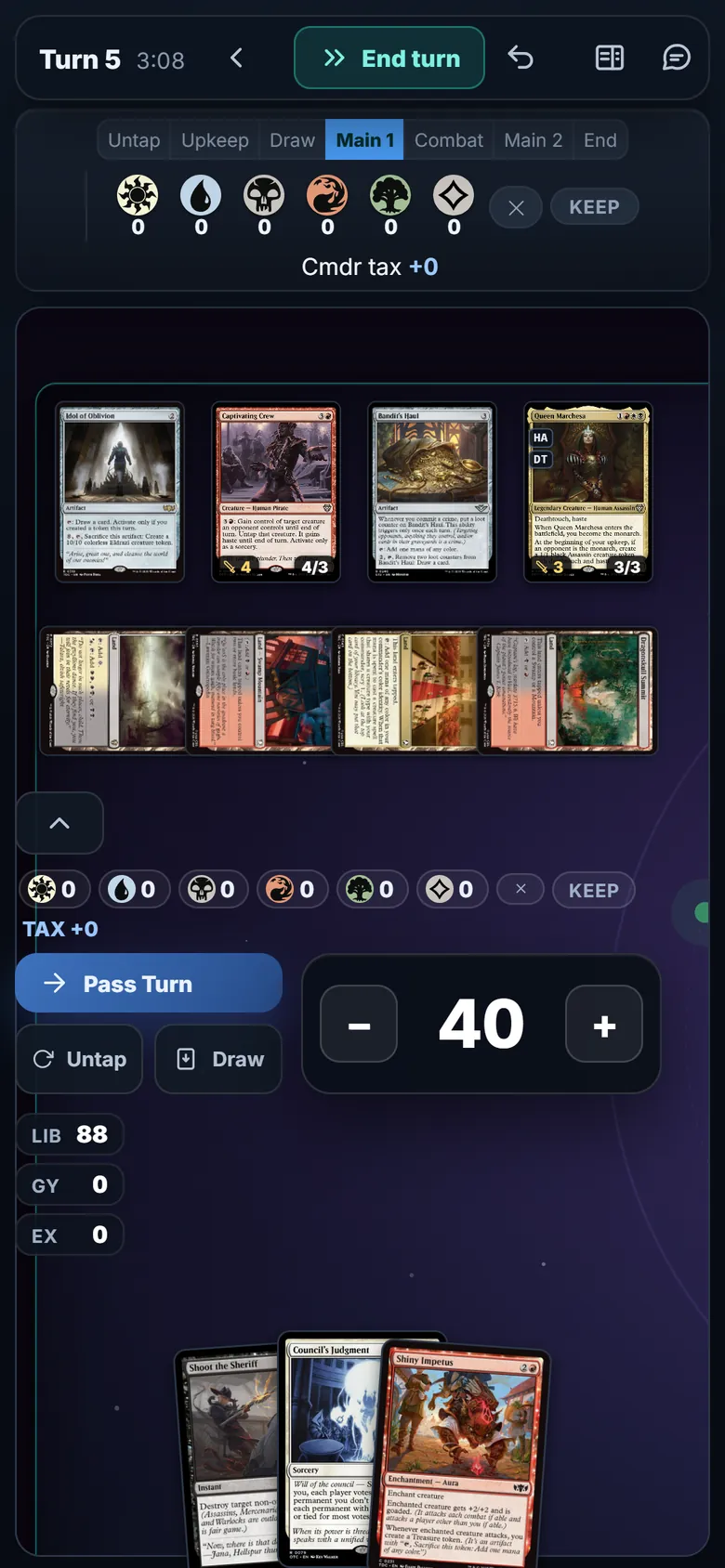
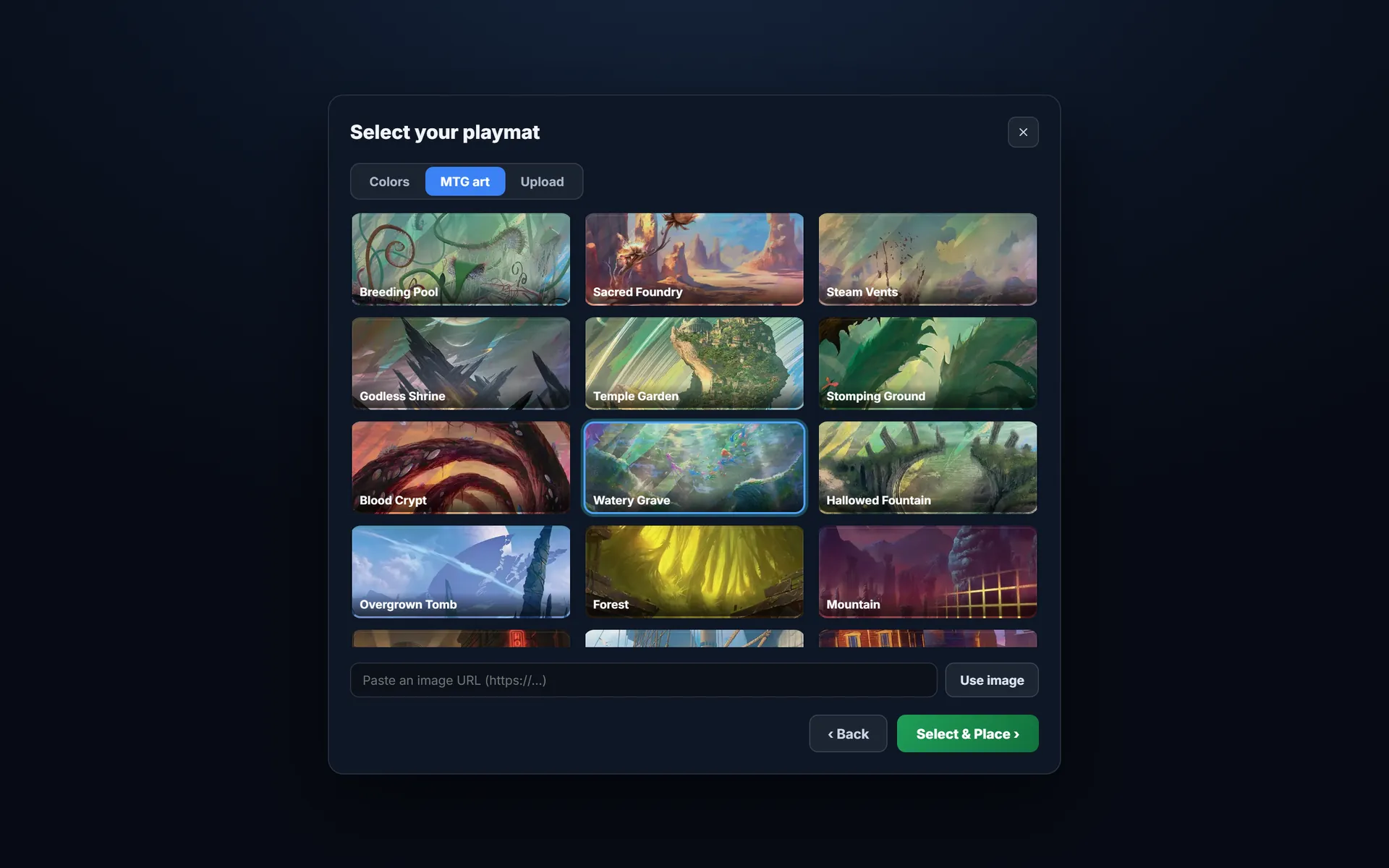
Pick Commander and choose a deck: one of your own, or any of the official precons, each tagged with its power bracket. The table deals your opening hand, and the first mulligan is free. From there it's a full battlefield — drag, tap and flip cards, a clickable phase bar, life and commander tax, tokens and counters, undo and an action log, with every card's art fetched from Scryfall. It plays on a phone too, on a playmat of your choice: a colour, a piece of Magic art, or an image of your own. Commander Draft and Planechase are built as well, and listed on the table as coming soon.
Play online, on your own server
Sigil is fully hostable; it just isn't live right now. The table itself is a static site, and online play runs on Supabase: run the repo's four SQL files, turn on email sign-in, and add the project's URL and key. A host opens a lobby, sets a bracket cap and shares an invite code; everyone locks in a deck and enters together. Players talk over voice chat built into the table and see each other's cursors, and anyone can spectate a live game or watch one back later. Ranked games feed an Elo leaderboard, and tournaments pair players round by round.
Hidden means hidden
Every player's browser keeps the game in sync, so the hard part is the cards nobody else should see. Sigil leaves that to Postgres. A hidden card's identity lives in a separate table that only its owner can read, and the shared row everyone else gets says nothing about what it is — so even a client that moves someone else's hidden card learns nothing from it. Two SQL scripts test both ways in, reading and tampering, signed in as different players.
Build a deck
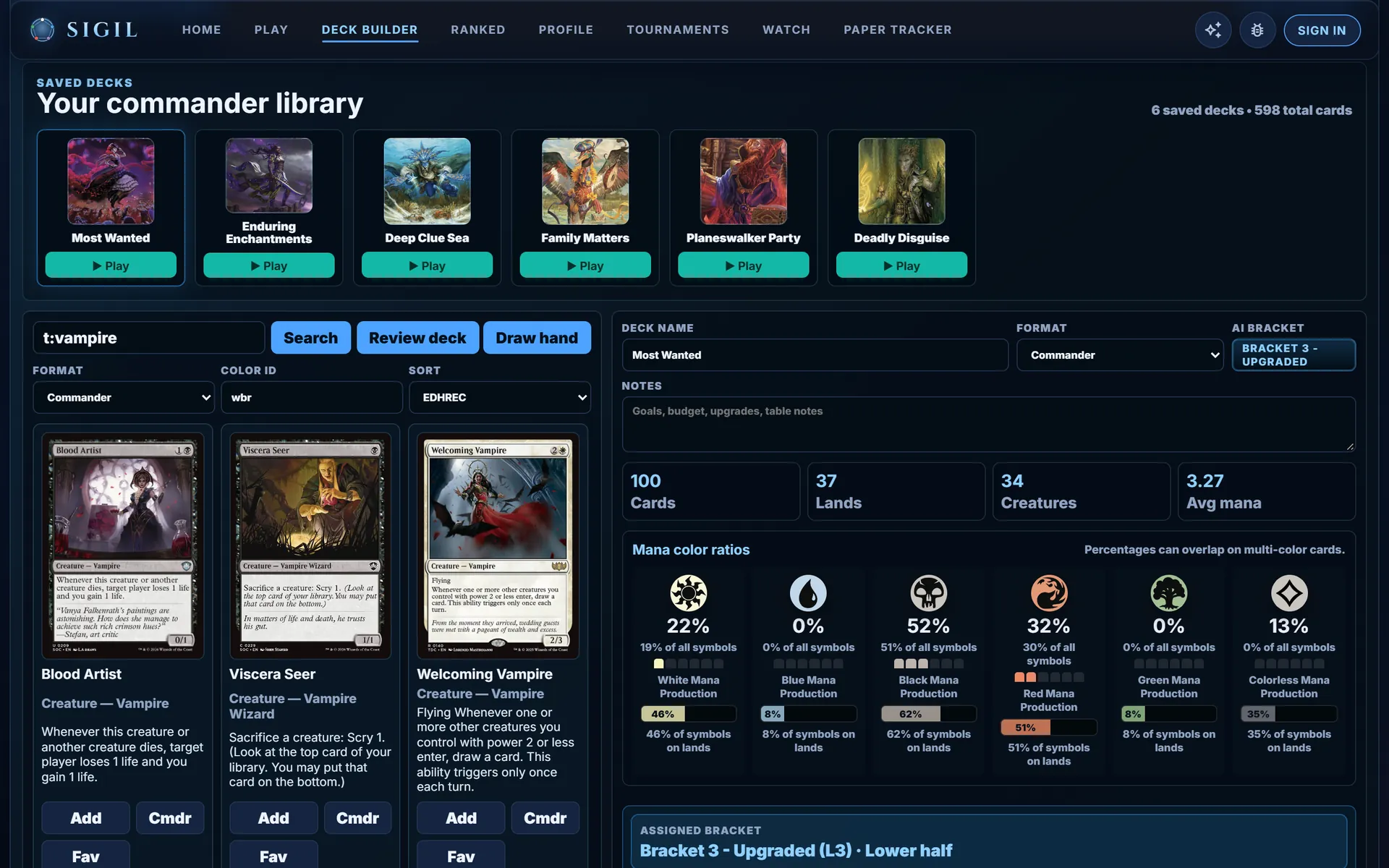
The deck builder searches Scryfall with filters and sorting, keeps a library of Commander decks, and shows the numbers that matter: the curve, the colour balance, lands and creatures, and an estimated Commander bracket with a review of the deck. Lists paste in from Moxfield, Archidekt or MTGA, and once you sign in, your decks sync to your account.
At a real table
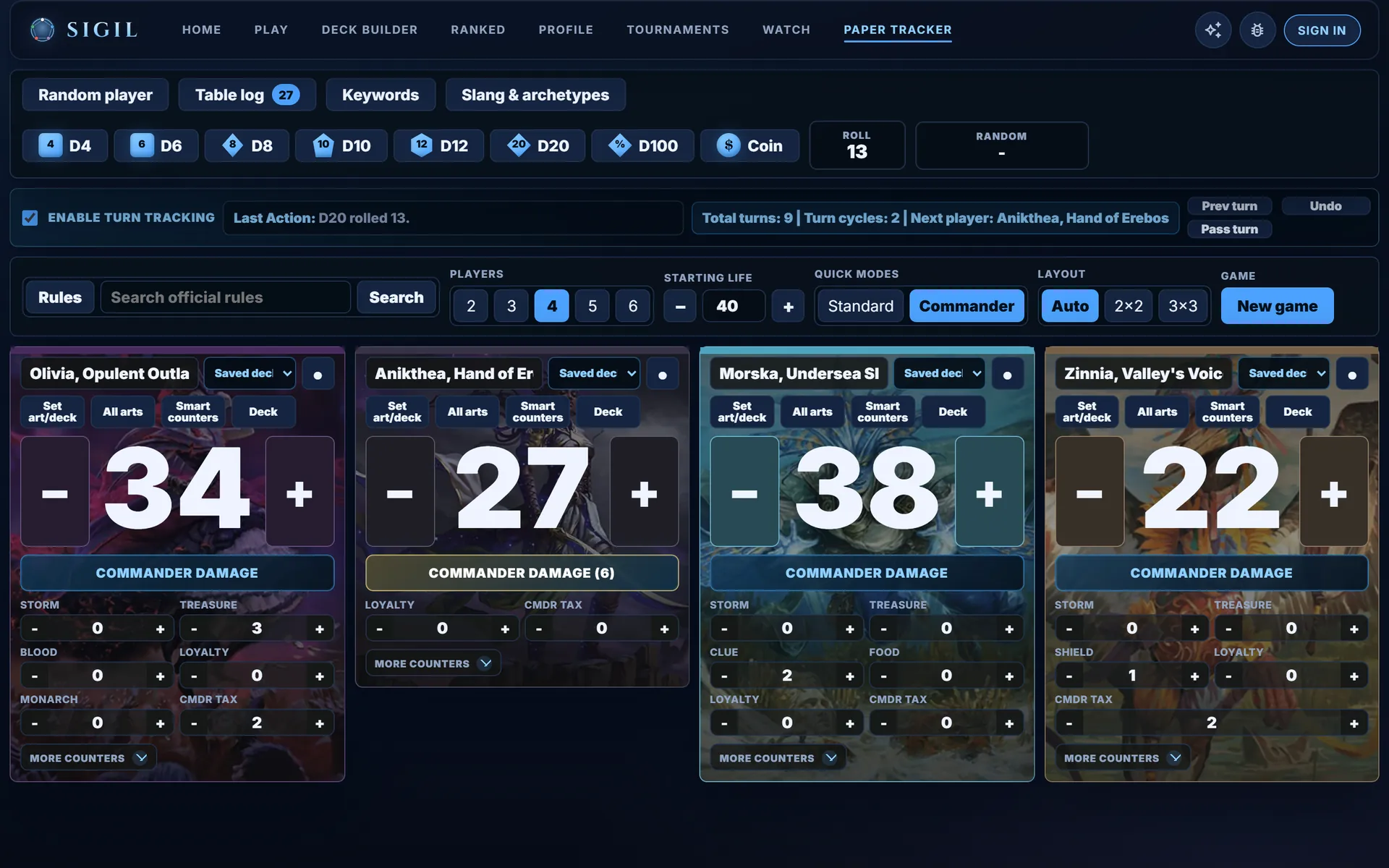
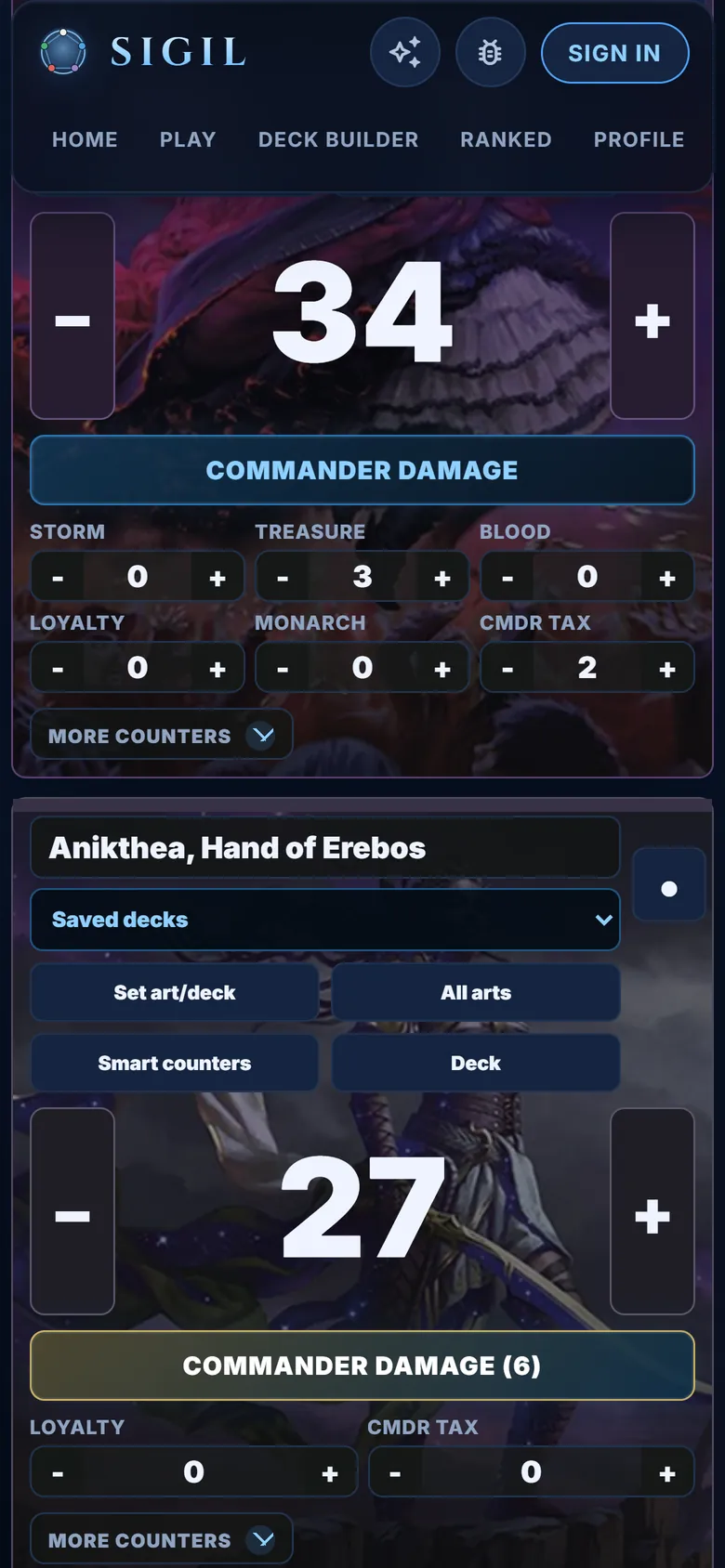
The paper tracker is for games in person: two to six players with their commanders' art behind their life totals, commander damage by source, counters the deck itself suggests — storm and treasure for one, clues and food for another — dice, coin flips, a random first player, turn cycles, and a search of the official rules.
Under the table
Deliberately boring technology: no framework and no bundler — open index.html and play.
Every change to a game is an action passed through a pure reducer, reduce(state, action), with an
exact inverse for undo and a seeded shuffle, and online play sends the same actions over Supabase Realtime. A
headless harness boots the table, loads a solo game and a four-player pod, opens every panel and checks for
zero console errors.
A rules engine is growing underneath: an event-sourced core that runs the stack and priority the way the Comprehensive Rules lay them out, a parser that checks mana payments, and 131 modules for single mechanics, from cascade to convoke, each with its own tests. For now it only advises. An overlay you can switch on flags state-based actions, such as lethal damage or the legend rule, and shows each creature's real power and toughness, while the players still run the game.
Sigil is unofficial Fan Content permitted under the Fan Content Policy. Not approved or endorsed by Wizards. Card data and imagery courtesy of Scryfall.